%20(1).png)

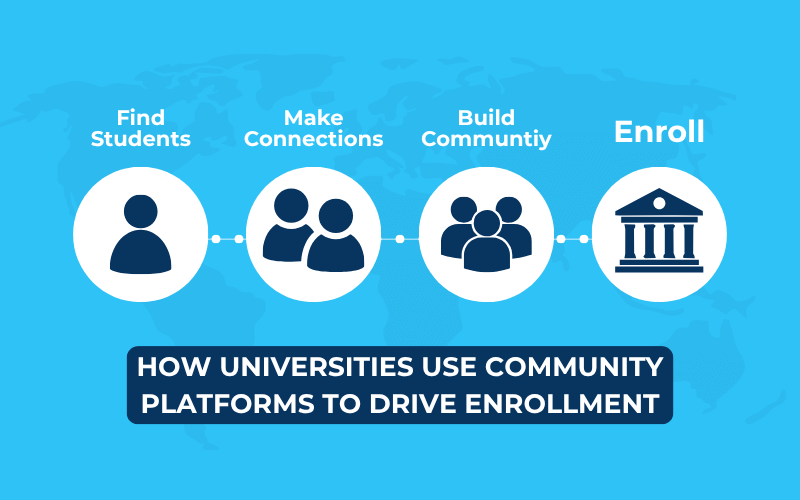
How Universities Use Community Platforms to Drive Enrollment
Goin' is a community-building software platform for higher education institutions. It facilitates student-to-student connections to drive institutional enrollment, retention, and onboarding, transforming the student experience from a transactional process into a social one. This article examines how universities use dedicated community-building software to improve these outcomes, and how social networking helps new students build a sense of belonging before they arrive on campus.
Driving enrollment and retention through community
With declining enrollment rates and increasing competition for student attention, colleges and universities are turning to specialized software platforms to foster meaningful connections and create vibrant campus communities. Community-building is now a strategic institutional necessity rather than a social luxury, and it is evaluated on measurable student outcomes.
Community platforms for universities help institutions address this pressure by giving prospective and admitted students a structured way to connect early. Enrollment management features, such as shared interest tagging and peer matching, help students find peers with similar academic or extracurricular interests, which builds a sense of belonging that supports both enrollment and retention. When students feel they already have a community at an institution, they are more likely to follow through on their enrollment decision and persist once on campus.
Student onboarding tools play a supporting role by streamlining the transition from inquiry through move-in. By connecting students with each other and with the institution during this window, onboarding software improves conversion rates and eases the logistical and social challenges of starting at a new university.
Connecting students through the friendships module
At the core of Goin' is a friendships module that helps students find others with similar academic or extracurricular interests, both on a one-to-one level and through engaging group chats. Rather than leaving students to discover community on their own, the module actively matches them with peers who share their academic interests, extracurricular activities, or both.
These connections happen at two levels. On a one-to-one basis, students can find and build friendships with individual peers who share their interests, creating the personal bonds that anchor a sense of belonging. At the group level, students join themed group chats where they can participate in ongoing conversations with a community of like-minded peers. This layered approach means students can develop both close individual friendships and a broader community identity before they arrive on campus.
The friendships module is stimulated through Goin's gamification features, which guide students to act on these connections. Gamification prompts students to connect with others, join specific groups, and view content tailored to their interests, encouraging the behaviors that build community rather than waiting for them to happen naturally. This turns community-building into an active, guided journey rather than a passive expectation.
Social networking for student connection
Social networking for universities enables students to form friendships and establish a campus community before their first day of classes. University-specific social networking apps differ from general-purpose platforms by providing a secure environment where incoming students can connect with verified peers at their own institution, rather than a public, open network.
Early social interaction helps new students navigate the transition to campus life and reduces feelings of isolation. Students who arrive with established friendships and a sense of belonging report an easier transition and are more likely to remain engaged through their first year.
Frequently asked questions
What is a community-building platform for universities?
A community-building platform for universities is software that facilitates student-to-student connections to support enrollment, retention, and onboarding. It provides a secure, institution-specific environment where prospective and current students can meet, form friendships, and build a sense of belonging before they arrive on campus.
How can community platforms support student retention?
Community platforms can help students begin forming social connections earlier in their university journey. By giving students opportunities to meet peers, join relevant groups, and develop a network around their studies and interests, universities can make community part of the transition into university rather than something students have to establish entirely after arrival.
How do students find others with similar interests on Goin'?
Goin' has a friendships module that helps students find others with similar academic or extracurricular interests, both one-to-one and through engaging group chats. Gamification features encourage students to explore relevant connections, groups, and content as part of a more personalized student journey.
Why use a university community platform instead of WhatsApp or social media?
General social networks can help students connect, but they are not designed specifically around an institution's student journey. A dedicated platform gives students an institution-specific environment where they can discover relevant peers, interests, and groups while giving universities a structured way to facilitate those connections.
When should universities start building their incoming student community?
Community-building can begin before students arrive on campus. Giving prospective and admitted students opportunities to meet peers during the decision and pre-arrival period means students can start asking questions, finding people with shared interests, and developing relationships before their first day. 1
%20(1).png)
.png)
.svg)
.png)
.png)
%20(1).png)
.jpg)
.png)
.png)
.png)
%20(1).png)
.png)
.jpeg)
.png)
.jpg)
.png)
.png)
.png)

%20(1).png)
.png)
.png)
.jpg)
.png)
.png)
.png)
.jpg)
.png)
.png)
.svg%20(1).png)
.png)
.png)
%20(1).png)
.png)
.png)
%20(1).png)
.jpg)
%20(1).png)
%20(1).jpg)
%20(1).jpg)

.svg)
.png)
%20(1).png)
.png)
.jpg)
.svg)
.jpg)
.jpg)
.png)
%20(1).png)
.png)
.svg)
.jpg)
.png)

.png)

%20(1).png)
.png)
.png)
.png)
.png)
.png)


%20(2)%20(1).png)


.jpg)


.png)
.png)
.png)
.png)
.png)
.png)
